



Have I mentioned that I think small farms are the best farms? Well, I’m not alone, and I have the perfect book to prove it. According to Josh Volk, author of Compact Farms: 15 Proven Plans for Market Farms on 5 Acres or Less (compactfarms.com) “The point is that it doesn’t take a large space to be productive or to make a decent, sustainable living.” This is a beautiful and practical book that focuses on small-scale commercial farms effectively using less than 5 acres of production space. From Slow Hand Farm (the author’s own small space in Oregon); to a tropical oasis growing coffee and bananas in Hawaii; to a green sanctuary growing food on rooftops in New York City; to a less-than-an-acre mini-farm—Volk repeatedly makes his point that small-scale agriculture can be simple as well as successful.
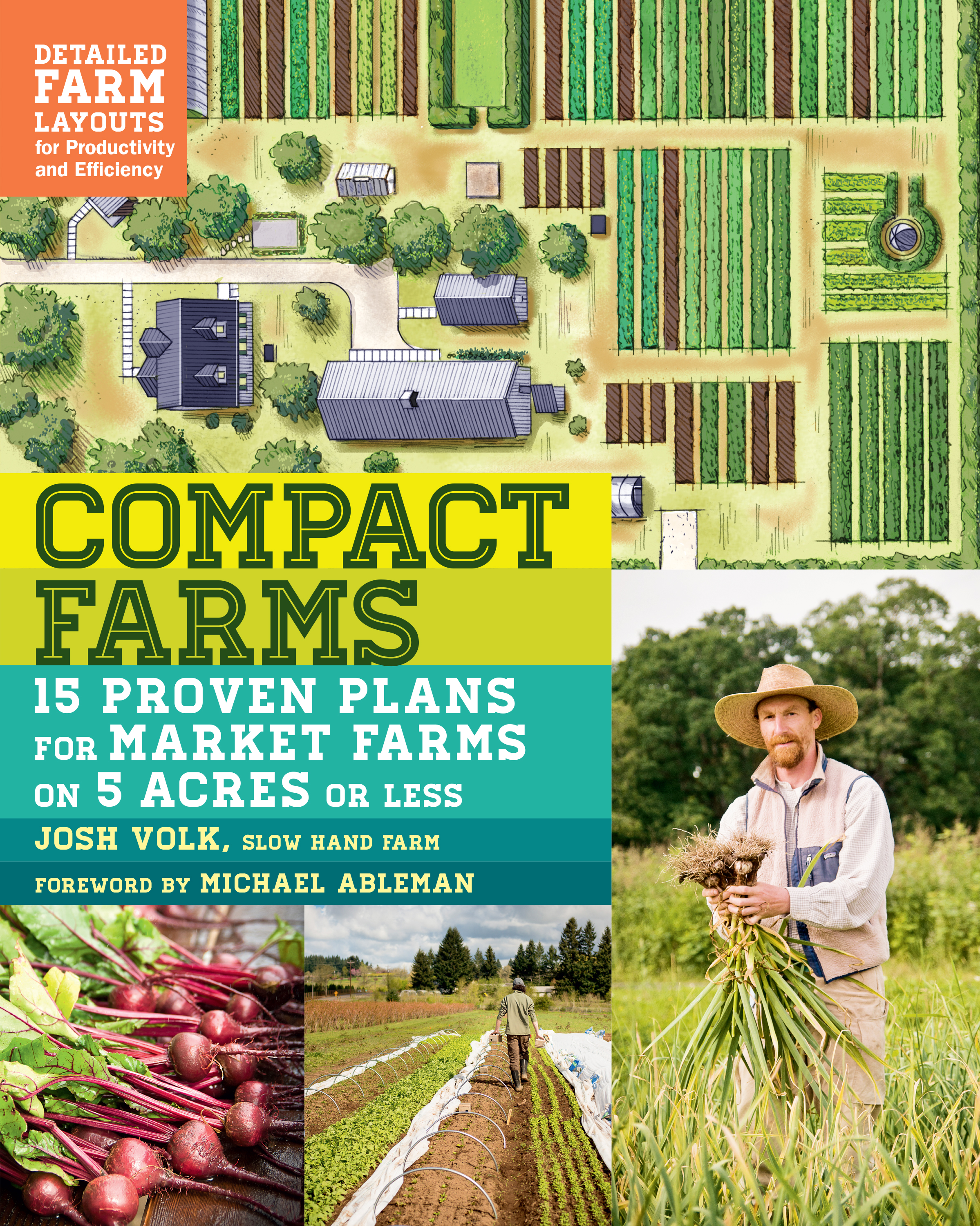
Beginning with a brief impassioned plea on the joys and benefits of farming small scale, the crux of the book comes in Part Two: fifteen profiles of small-scale working market farms. Volk includes beautiful full-color birds-eye layouts for every farm, as well as information about each farm’s unique approach to labor, water, fertility, tools, infrastructure, crop care, harvesting, and the all-important question of what happens to the harvest. Dozens of beautiful photographs help to illustrate the farm profiles, and those who enjoy getting out the watercolors and pencils to design their gardens, or looking at landscape architecture books, will absolutely adore the farm layout illustrations.
But it’s not all just pretty pictures. Volk clearly lays out the “nuts and bolts” of how to achieve small farm sustainability yourself – from carefully planning what you want to achieve, to considerations such as water, infrastructure, livestock, and harvest planning. Perhaps the most important consideration gets its own chapter: “Making It Work Financially” gets into the nitty gritty details of numbers, budgets, and bottom lines. Volk’s point throughout is that if planned properly, these small farms not only work, but work better than their larger counterparts, for the farmer, the consumer, and the planet. His passion for these small, productive pieces of land is evident on every page of this beautiful book.
If you are interested in small-scale farming and are considering making a go of it as a market farmer, Compact Farms is an absolute gold mine of information and a helping hand to get you on your way. And even if you’re not going commercial, it’s an enjoyable and edifying read for anyone interested in small-scale farming. I highly recommend it!